
London Business Training & Consulting Highlights the UK Skills Gap and Why Business Training Has Never Been More Critical
London Business Training & Consulting Highlights the UK Skills Gap and Why Business Training Has Never Been More Critical
London Business Training & Consulting (LTBC) examines the growing workforce crisis across the United Kingdom, where a widening skills gap continues to challenge businesses of all sizes. While headlines focus on inflation, interest rates and geopolitical uncertainty, a quieter emergency is unfolding in boardrooms and HR departments across the country: a deepening skills gap that is costing British businesses billions in lost productivity every year.
According to the Department for Education, over a third of UK employers report skills shortages as a primary barrier to growth. The government's own Skills England agenda, designed to rebuild the country's training infrastructure and align employer needs with the education system, acknowledges what business leaders have known for years: the UK is not producing, or retaining, the skilled workforce it needs to compete in a rapidly evolving global economy.

For Rohit Chandiramani, CEO of the London Business Training & Consulting, the data confirms what he hears from clients every single day.
"The skills gap isn't a future problem - it's a present one," says Chandiramani. "We speak to HR managers, L&D leads and senior executives across sectors who are struggling to find people with the right combination of technical knowledge and leadership capability. The demand for structured, accredited professional development has never been higher, and yet too many organisations are still treating training as a cost rather than an investment."
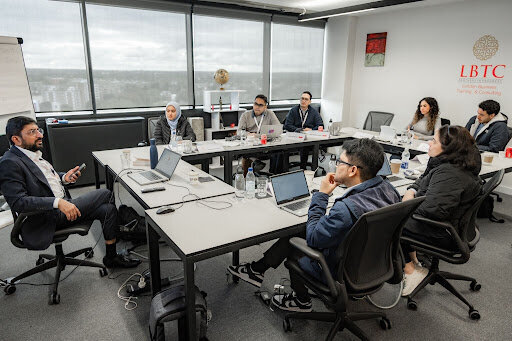
LBTC is one provider working directly at this intersection. The organisation holds BAC accreditation, an internationally recognised quality standard, and has built a portfolio of more than 1,000 courses spanning leadership management, finance, HR, project management and beyond. That combination of independent accreditation and genuine breadth is increasingly what employers look for when selecting a training partner.
That breadth matters. The skills gap is not confined to one sector or one level of seniority. Project delivery failures, for instance, are frequently traced back not to lack of technical expertise, but to poor planning, stakeholder management and team leadership. LBTC's project management portfolio is designed precisely to address this, equipping professionals with both the methodological frameworks and the interpersonal skills to lead complex initiatives to successful completion.
Similarly, people strategy has never been more complex. Remote and hybrid working, changing employee expectations, diversity and inclusion requirements, and tightening employment legislation have transformed the role of HR from administrative function to strategic linchpin. LBTC's HR training courses help practitioners at every level navigate this landscape with confidence, from frontline managers to HR directors building capability frameworks for entire organisations.
And in an era of information overload, the ability to cut through the noise is a competitive advantage in itself. LBTC's marketing and public relations programmes equip communications and marketing professionals with the strategic thinking and practical tools to build brands, manage reputation and drive measurable business outcomes, skills that are increasingly central to every organisation's commercial success.
Chandiramani is particularly vocal about the role of bespoke training in addressing systemic skills gaps.
"Off-the-shelf solutions have their place, but the most transformational results come when training is designed around an organisation's specific context, culture and goals. Our bespoke offering allows businesses to build on our accredited content and shape it to their workforce, which tends to mean higher engagement, better retention and faster impact on performance."
The scale of the UK's skills gap can feel daunting, but it is not inevitable. Closing it will require employers to move beyond ad hoc training and commit to structured, ongoing development, treating capability building as a strategic priority rather than a line item to be cut when budgets tighten. For organisations that make that shift, the rewards are tangible: higher productivity, stronger retention and a workforce equipped to meet whatever the economy demands next.
About LBTC
London Business Training & Consulting (LBTC) is a BAC-accredited professional development organisation offering over 1,000 management and business courses to individuals and organisations worldwide. For more information, visit lbtc.co.uk.
Media Contact: London Business Training & Consulting www.lbtc.co.uk